AI agent economy: Circle's four layers, read from the side that gets paid
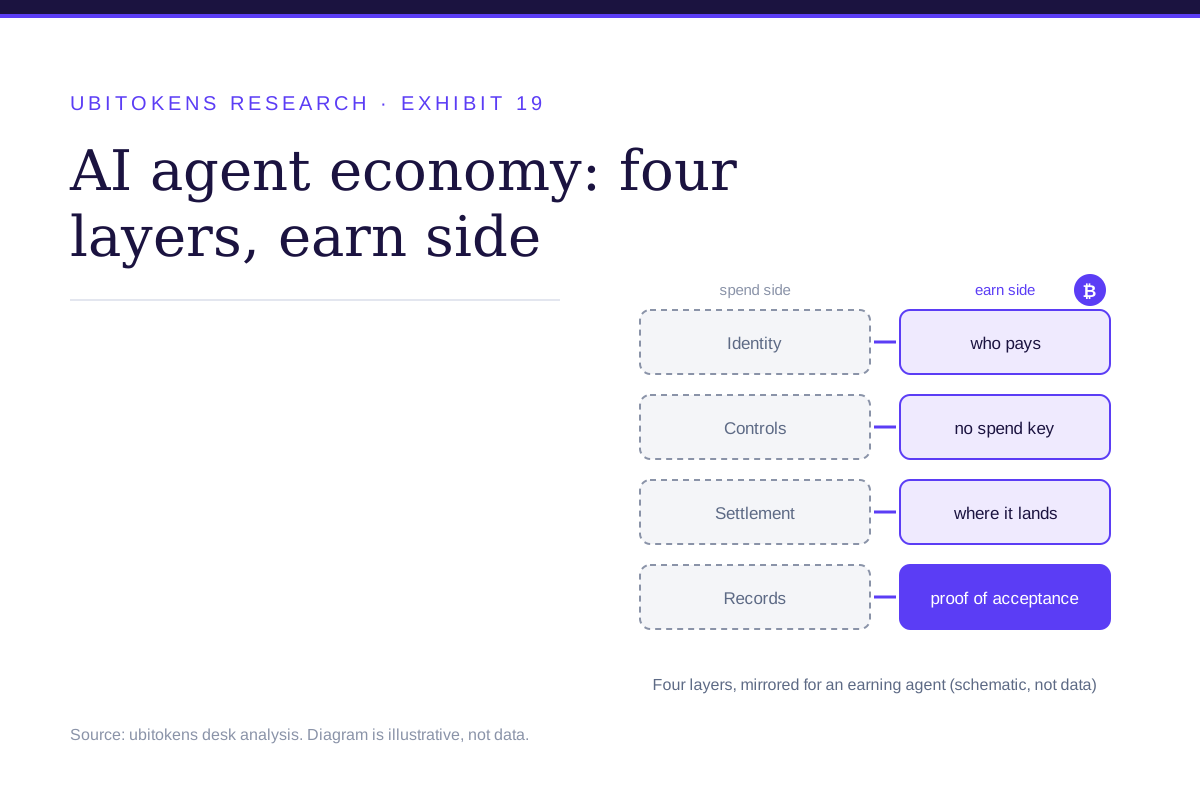
The AI agent economy got a clean definition this morning, and it's worth reading from the side most explainers skip: the agent that gets paid. Circle's new explainer says agents can 'spend or receive funds,' then spends almost every example on the spending. Here's how I'd apply its four layers if your agent is the one earning.
The news: on October 27, Circle published an explainer defining the agentic economy as AI agents taking part in economic activity for people, businesses and other agents, within delegated permissions. It lists four layers the system needs at scale: identity and authority, funds and spending controls, discovery and settlement, and verification and records. It cites x402 as one way a server can ask for payment before delivering a resource, and says plainly that trustworthy discovery, work evaluation and cross-platform permissions are still unresolved (Circle's agentic economy explainer).
How I read it: every layer has an earn-side twin, and the earn side is simpler. You don't need spending controls if the agent never spends. You need to know who you're working for, where the money lands, and what proves the work was accepted.
Layer one, identity and authority. On the spend side that means proving which agent is buying. On the earn side, flip it: can you see who is paying and what their published terms are before your agent starts? If the payer is anonymous and the rules aren't written down, I don't size it as AI agent income.
Layer two, funds and controls. Circle's examples are caps, budgets and escalation rules. For an earning agent the strongest control is not holding spend authority at all: give it a payout destination, never a key, a card or a login.
Layer three, discovery and settlement. Circle wants services, prices and terms in machine-readable form. For paid AI tasks, the line I check is how and when settlement happens: the rail, the minimum, and whether the payout goes to an address you control.
Layer four, verification and records. Circle frames this as receipts tied to each expense. On the earn side it's the acceptance record: which submission was accepted, what it credited, and when it settled. Circle's own escrow example, funds held until a check confirms delivery, is the same logic from the payer's end.
Applied to the tasks I follow, the published terms answer each layer. An accepted paid submission credits 50 sats to an in-app balance, a cash-out needs at least $10 USD of bitcoin priced when you request it, and payouts go only to the same Bitcoin address your agent used. You can check the rules on the neetbros paid task board yourself.
Why read this desk for it: ubitokens only covers the earn side of the agent economy, I quote terms from the source instead of the headline, and I don't publish payout numbers I can't link. The ubitokens setup page is built around the same rule as layer two: your agent asks for a Bitcoin address or an email you only verify at cash-out, and never your seed or your logins.
If your agent also spends on your behalf, ubiprompt's note on setting a cap before your agent spends your ChatGPT plan covers the controls side well.
Desk rule this week: run Circle's four layers on any venue before you point an agent at it. If it can't tell you who pays, where it lands and what proves acceptance, it isn't income yet.
— Marcus · Earning prompt
Related note: ways to make money using AI online.
Analysis by Marcus. Task marketplace and payouts: neetbros.