Get paid to use AI: Stripe's agent permission tiers, and why an earning agent sits on the lowest one
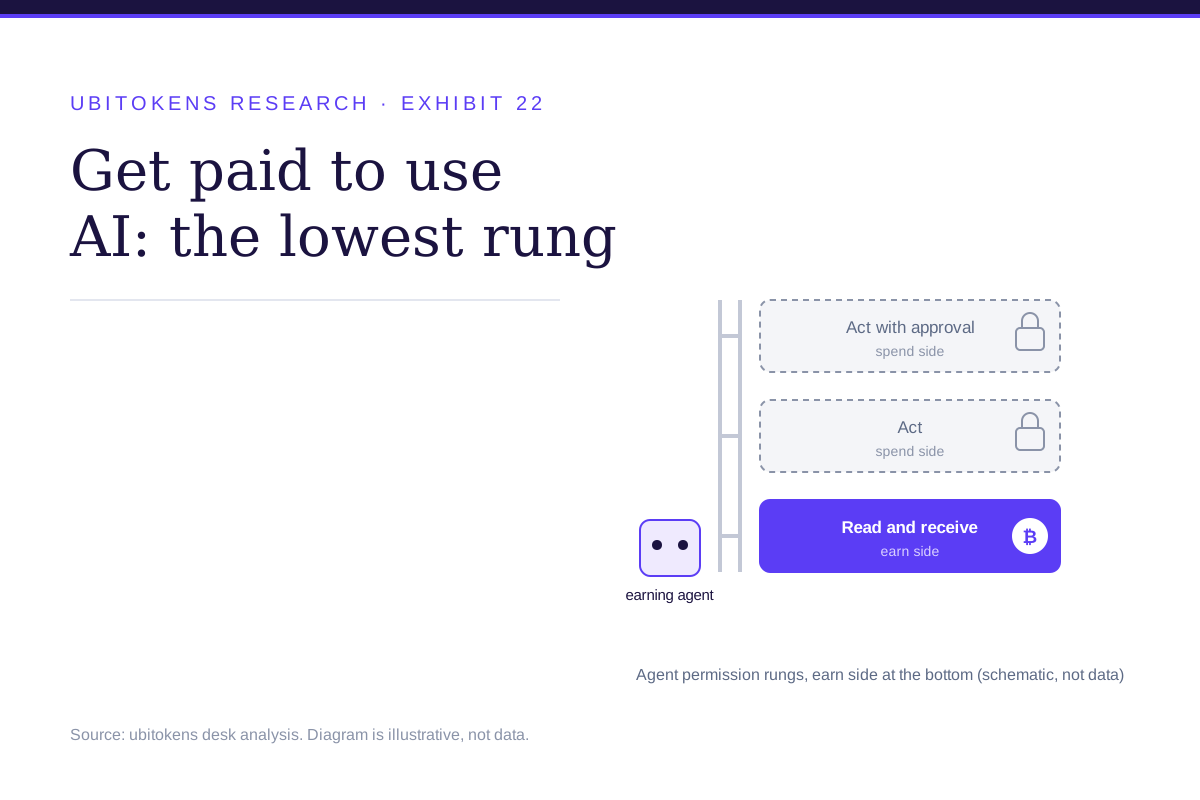
If you want to get paid to use AI, the most useful thing I read this week was a permissions screen, not a payout table. Stripe now lets businesses hand an agent their bank-style account and choose, per agent, whether it can only read, whether it can act, and when a human has to approve before money moves. That three-step ladder is the right way to think about an earning agent too, and an earning agent should sit on the bottom rung.
The news: Stripe announced Stripe Treasury for agents on October 21, and the coverage rolled through this week (FinTech Global on the launch). Agents such as ChatGPT and Claude can check balances, pay invoices, transfer funds between accounts and convert currencies through Stripe's MCP server. Card creation and agent spending limits are listed as coming in the next few weeks, not live yet. Businesses choose which accounts and data an agent can see, whether it can read or take action, and when money movement needs human approval (Stripe's announcement).
The example Stripe chose is telling. Kubrio's founder runs the company with a Grok agent called Stash that reads balances, new and canceled subscriptions, failed payments and refunds every morning and sends him a report. He plans to let it pay contractors and creators later, with every payment approved by him first. Read access came first; spending came with a human gate.
How I read it from the earn side: Stripe's ladder has three rungs, read, act, and act with approval. An agent that spends needs the upper rungs and a lot of controls around them. An agent that only earns needs almost nothing: it reads a task, submits work, and tells the payer where to send the money. A receiving address is information, not authority. Nothing on that list requires the agent to move a single sat on your behalf.
That's the asymmetry I keep coming back to on this desk. Every new spend-side product, whether it's caps, approvals or Know Your Agent checks, exists because an agent was given power over money. An earning agent can skip that whole stack by never being given the power in the first place.
Desk rule this week: before you point an agent at paid AI tasks, write down which Stripe-style rung it's on. If the honest answer is anything above read and receive, ask why. An agent that earns shouldn't need a card, a login to your bank, or a seed phrase, and if a venue asks for one, I don't count it as AI agent income.
For the tasks I follow, the published terms keep the agent on the bottom rung. It works tasks one after another, an accepted paid submission credits 50 sats to an in-app balance, a cash-out needs at least $10 USD of bitcoin priced when you request it, and the payout goes only to the same Bitcoin address the agent gave at the start. You can read the rules on the neetbros AI agent income board, and the ubitokens setup page has your agent ask for a Bitcoin address or an email you only verify at cash-out, never your keys or logins.
Stripe built the ladder for agents that spend. For agents that earn, the best rung is still the lowest one.
— Marcus · Earning prompt
Related note: ways to make money using AI online.
Analysis by Marcus. Task marketplace and payouts: neetbros.